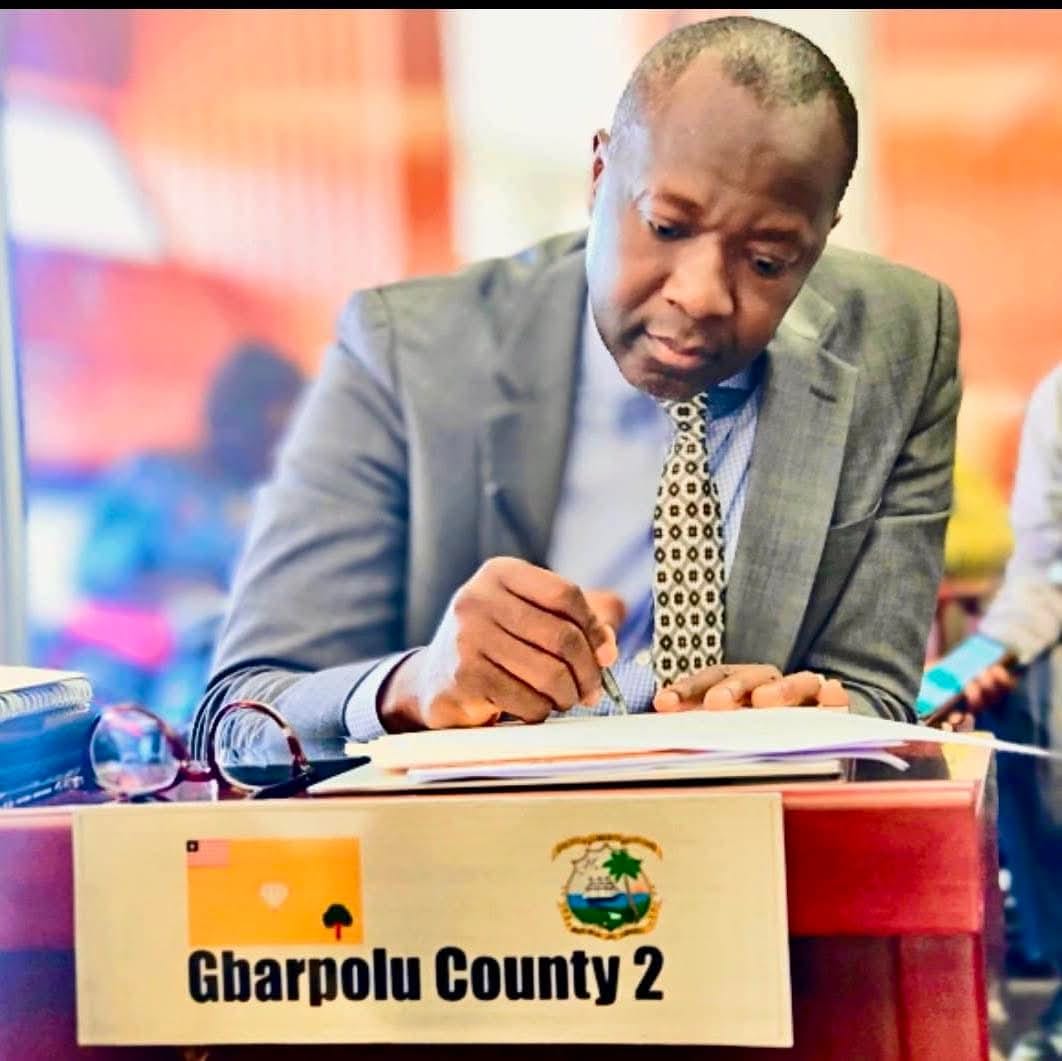
In an unprecedented attack from within the ruling establishment, Gbarpolu County Senator Amara Konneh, a former Minister of Finance himself, has exposed what he calls a pattern of “illegal,” “reckless,” and “convenient” financial manipulations by the Joseph Boakai administration, accusing it of gutting critical national projects to fund bureaucratic inefficiencies.
The scandal centers on the FY2026 draft budget, recently rushed through the House of Representatives without scrutiny, which Konneh alleges is a repeat of the “manipulated” FY2024 budget he previously flagged—a warning he says was ignored by both the Executive and his legislative colleagues.
“Budget Treated as Petty Cash,” Laws Flouted In a detailed indictment published yesterday, Senator Konneh cites the Budget Transfer Act of 2008, stating that funds are to be moved only when “essential.” He presents damning evidence that the Boakai government, despite strong revenue performance, has systematically violated this principle.
“The government is not cash-strapped,” Konneh declared. “There was no urgent liquidity crisis. These transfers were not driven by necessity; they were driven by choice. A choice that undermines the President’s own ARREST Agenda and proves this government’s rescue mission is a sham.”
Lives at Risk, Agenda Sabotaged: The Damning Evidence Senator Konneh listed catastrophic consequences of the alleged illegal transfers:
- Roberts International Airport (RIA): 62% of its upgrade allocation stripped. “This has put the safety and lives of Liberians and international travelers at risk,” Konneh warned, reminding the public of near-miss accidents during the previous administration. “Jetways fail, escalators don’t work, systems are down. This government is recreating the very dangers it condemned.”
- Agriculture: $1.2 million diverted from core value-chain programs, directly sabotaging the “first pillar” of the ARREST Agenda and betraying the nation’s largest workforce.
- Public Health & Sanitation: 50% of funding for the Landfill and Urban Sanitation Project diverted. “Look at the filth in Monrovia,” Konneh charged. “They circulated videos of garbage under CDC; now they are creating the same ‘dump piles’ through deliberate budget cuts.”
- Fiscal Integrity: Funds for the Revenue Enhancement Project, meant to ensure sustainability, were rerouted, “weakening fiscal credibility.”
A New “Slush Fund” and a Culture of Secrecy Konneh further accused the Ministry of Finance and Development Planning of creating a shadowy, unaccountable spending vehicle. He opposed the use of “General Claims” not in principle, but due to the “opacity” of collapsing them into a “new spending entity without clear disclosure.” “This is a blatant disregard for fiscal accountability,” the Senator asserted. “The Legislature and the public have no idea who controls this money, who will answer for it, or how it will be tracked. It was inserted without our knowledge. This is how slush funds are born.”
“This Government is Racing to the Bottom” In a direct rebuttal to administration defenders, Konneh dismissed comparisons to past governments as irrelevant and cynical. “This government came to correct wrongs, not to justify present failures by pointing to past excesses. This is not about personalities. It is about current execution, and the execution is failing Liberia.”
Call to Action and a Stark Warning Konneh concluded with a final shot across the bow of his Unity Party colleagues, signaling a looming confrontation in the Senate. “We must stand against treating the national budget as petty cash… My concern is the impact on national development—agriculture, health, infrastructure, and safety at our airport.” He pledged that the Public Accounts and Audits Committee would enforce “real-time reporting and outcome-based accountability” in FY2026, promising heightened oversight that could paralyze the Boakai administration’s spending plans.
Implications: Senator Konneh’s transformation from cabinet insider to the government’s most credible and damaging critic marks a profound political crisis for President Boakai. The allegations—backed by legal citations and specific financial data—paint a picture of an administration already resorting to the very financial malfeasance it pledged to abolish, prioritizing bureaucratic convenience over citizen safety and national development. The coming Senate battle over the budget now threatens to expose a deep rift within the ruling party and derail Boakai’s agenda before it truly begins.

