
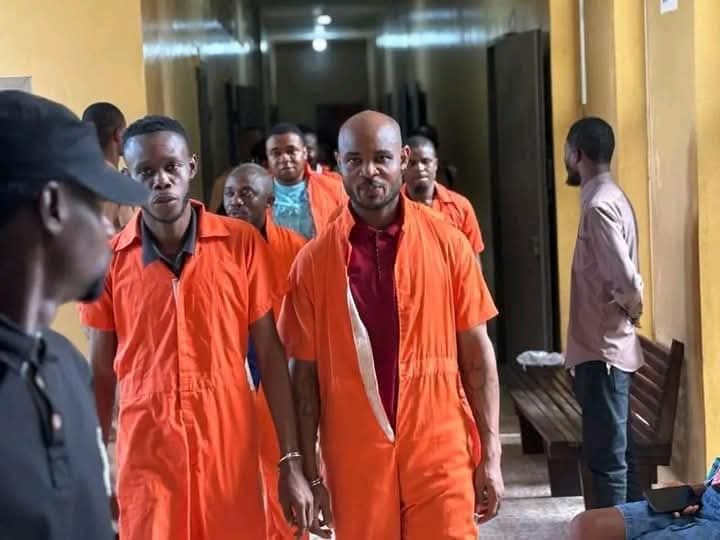
Government lawyers have moved to disband the jury panel in the Capitol Building arson trial, a setback described by legal experts as a final attempt to revive a faltering prosecution. The trial, which has drawn widespread attention, faces uncertainty as it proceeds.
The case is hinged from the devastating fire that erupted at the Liberian Capitol Building in December 2024, causing significant damage to the joint legislative chambers. The incident, labeled an act of sabotage, triggered a national crisis and a high-stakes investigation. The government swiftly brought charges against several individuals, most notably former Speaker of the House J. Fonati Koffa, a powerful political figure, alleging conspiracy and direct involvement in the attack. From its inception, the trial has been shrouded in allegations of political motivation, with Koffa’s supporters claiming he is a target of a witch-hunt designed to neutralize a key opposition leader.
Prosecution’s “Hail Mary” Motion
On Monday, December 29, after 41 days of trial proceedings, the prosecution filed an extraordinary request with Criminal Court “A.” They argued the seated jury had become “contaminated” and incapable of impartiality, citing alleged juror misconduct. Prosecutors pointed to an instance where a juror, after reviewing video evidence, commented in open court that an individual shown “looked like a Chinese man and not” one of the accused, Tom Etheridge. They contend this shows premature judgment, requiring the drastic remedy of dismissing the entire panel and starting anew—a process that could add months to the already protracted trial.
Defense: “A Confession of a Losing Case”
The defense team, led by Counselor Wilkins Wright, has blasted the motion as a transparent “admission of failure” and a “mere tactic to hang a losing case.” In a scathing rebuke, Wright’s filing argues that under Liberian law, “mere discomfort, speculation, or dissatisfaction with juror questioning does not amount to juror bias, contamination, or legal disqualification.” The defense asserts the prosecution has “failed to demonstrate actual prejudice, corruption, external influence, or juror misconduct rising to the level required by law.”
Legal experts asserted that the prosecution’s complaint seems rooted not in genuine misconduct, but in jurors performing their duty: actively and skeptically assessing the evidence. Over weeks of testimony, the state’s case, heavily reliant on the testimony of Liberia National Police Chief Superintendent Rafael A. Wilson and contested video footage, has shown significant cracks. Under cross-examination, Wilson’s live testimony repeatedly contradicted his own official investigative report, undermining the prosecution’s narrative. Jurors have been visibly engaged, asking pointed questions that highlight these inconsistencies.
A Trial in Crisis
The prosecution’s motion underscores a trial in deep crisis.Public confidence in the proceedings has waned as allegations of political interference have grown. The absence of any direct physical or testimonial evidence linking Koffa to the fire has become a central weakness, with the case leaning on circumstantial links and disputed interpretations of grainy surveillance video.
If granted, the motion to disband the jury would not only represent a massive judicial setback but also raise serious constitutional concerns regarding double jeopardy and the right to a speedy trial. It would force a restart of one of Liberia’s most consequential modern trials, at tremendous cost to the state and the defendants. The presiding judge now faces a monumental decision:accept the prosecution’s unprecedented request and effectively acknowledge the trial’s dysfunction, or deny it and order the case to proceed with a jury that has already shown deep skepticism of the state’s evidence. Either outcome promises to further inflame political tensions and challenge the public’s faith in the judicial system’s ability to adjudicate a case of such national importance fairly.
The move by prosecutors is widely seen as a gambit born of desperation, a signal that their case is unraveling in real-time before the eyes of the jury and the nation.

