The international community must no longer remain silent in the face of mounting and deeply disturbing allegations of systematic violence, extrajudicial killings, and gross human rights abuses reportedly carried out by elements of Liberia’s state security apparatus. Liberia now confronts a profound crisis of accountability—one that threatens not only the lives and dignity
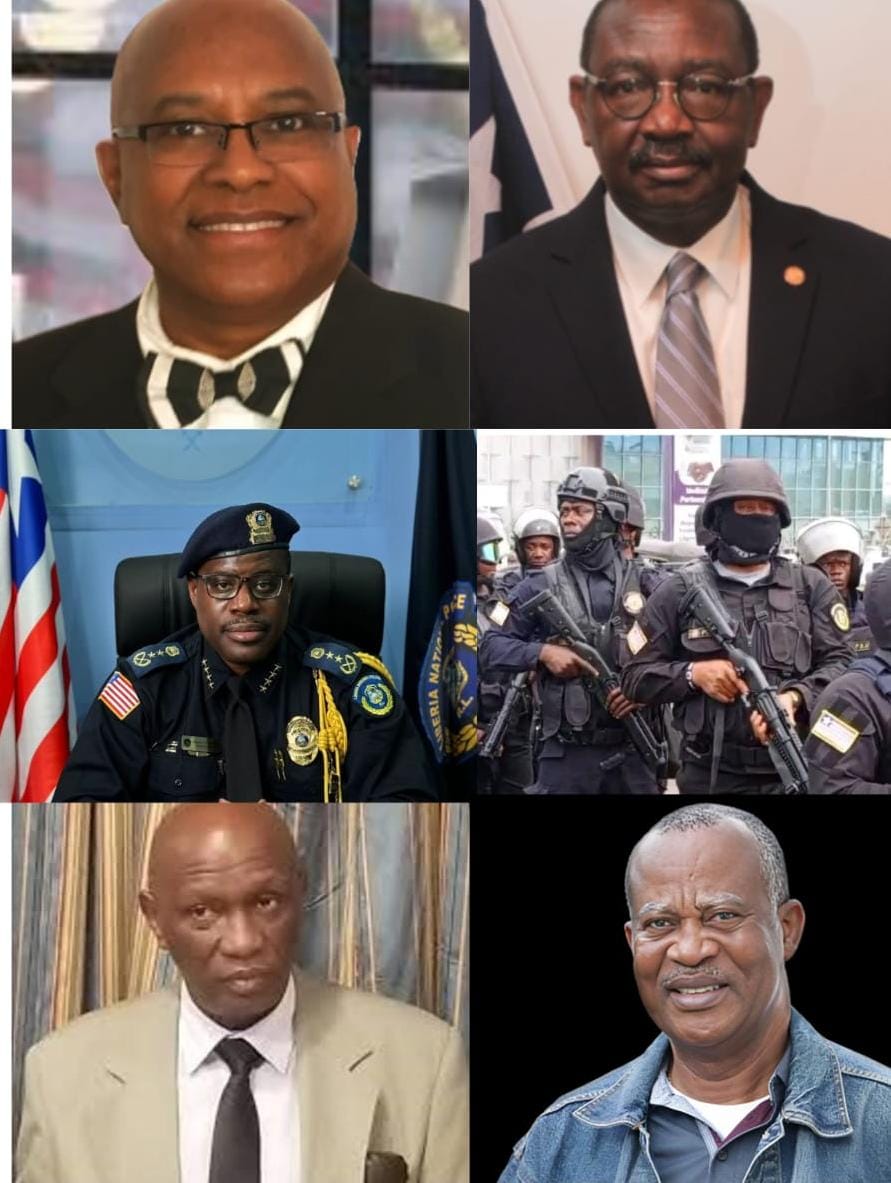
of its citizens, but also the credibility of its justice institutions and its standing within the community of democratic nations. We issue this urgent appeal to demand full, independent, and transparent international accountability for alleged crimes attributed to senior government and security officials, including Inspector General of Police Col. Gregory O. W. Coleman; National Security
Adviser Atty. Samuel Kofi Woods; Minister of Justice Cllr. N. Oswald Natu Tweh; Legal Adviser to the President Cllr. Bushuben Keita; Solicitor General Cllr. Augustine C. Fayiah and Chairman of the Assets Recovery and Property Retrieval Taskforce
(AREPT); Cllr. Edwin Kla Martin. The gravity and recurrence of the allegations associated with these officials compel immediate international scrutiny and decisive action to protect civilians and uphold the rule of law.
Reports compiled by civil society organizations, community leaders, eyewitnesses, and victims’ families describe a disturbing pattern of lethal force, custodial abuse, and violent misconduct by police and security officers, allegedly carried out with impunity. These allegations, if substantiated, would represent serious violations of Liberia’s Constitution, international human rights treaties, and basic norms governing the use of force by law enforcement. Rather than isolated incidents, these cases collectively suggest a systemic failure of oversight, accountability, and command responsibility within Liberia’s security sector. The absence of credible prosecutions and transparent investigations has fueled public outrage, fear, and a growing belief that justice is being selectively applied—shielding perpetrators while silencing victims. Among the many cases that have shocked the conscience of the nation and the diaspora are the following, each of which demands urgent, independent investigation:
- Matthew Mulbah — Reportedly killed by police officers in Congo Town on October 8, 2025. His death has left a grieving family and community calling for an impartial inquiry to establish the facts, identify responsibility, and deliver justice without political interference.
- Essah Massaley and Abraham Kerkula — Alleged victims of the Kinjor Massacre on February 28, 2024, in Grand Cape Mount County. This incident remains one of the most alarming episodes of alleged state violence in recent years, underscoring the urgent need for forensic, transparent, and internationally supervised investigation.
- James Kandy — A 17-year-old minor reportedly killed in Rehab on July 3, 2025. The killing of a child under state custody or control raises the most serious human rights concerns and demands immediate accountability.
- Mohammed Manobah — Another 17-year-old reportedly killed in Brewerville on May 9, 2025. This case reinforces growing concerns about excessive and unlawful use of force against minors.
- Musu Kiatamba — A 28-year-old pregnant woman, allegedly beaten to death on February 12, 2025, at Zone Three Police Station (Sayon Wolah, Rick Rock), Old Road. Few allegations are as grave as the reported killing of a pregnant woman while in police custody. This case alone warrants urgent international intervention.
- Favor — A 17-year-old reportedly shot and killed in Banjor, Brewerville City, District 17, allegedly by Police Officer Boima Massaley. An independent inquiry is essential to determine responsibility and ensure that justice is not obstructed.
Each of these cases represents not merely a statistic, but a human life lost under circumstances that demand answers. The repeated involvement of minors, detainees, and vulnerable civilians intensifies the urgency for action. Of particular concern to human rights observers is the allegation that senior officials within Liberia’s national security and justice architecture have either authorized, enabled, or failed to prevent these abuses. The principle of command responsibility under international law is clear: when senior officials know—or should have known—of widespread abuses and fail to act, they may bear responsibility. The continued absence of credible prosecutions, combined with reports of intimidation, silence, and retaliation against victims’ families and activists, has led many observers to conclude that domestic accountability mechanisms are either unwilling or unable to act independently. A Direct Appeal to the International Community. We therefore call upon:
- The United Nations, including the Office of the High Commissioner for Human
Rights, to initiate urgent monitoring and fact-finding mechanisms; - The African Union and ECOWAS to activate regional human rights and early-
warning frameworks; - The United States Government, particularly the Department of State and the
Department of the Treasury, to consider immediate application of Global
Magnitsky–style targeted sanctions, including travel bans and asset freezes; - The European Union and allied democratic partners to pursue coordinated
accountability measures; - International human rights organizations to intensify documentation, protection of witnesses, and advocacy. Targeted sanctions should be understood not as punitive measures against the Liberian people, but as protective and preventive tools designed to deter further abuses, uphold international norms, and signal that impunity will not be tolerated. Liberia is already grappling with economic hardship, allegations of corruption, and declining public trust in government institutions. Against this fragile backdrop, continued allegations of state-sponsored violence risk pushing the country toward deeper instability. History has repeatedly shown that when grievances are ignored and justice is denied, the
consequences are devastating—not only domestically, but regionally. The Panoramic Justice Group remains steadfast in its mission to promote accountability, transparency, and human dignity. The organization is actively advocating for a
comprehensive, internationally assisted investigation and is engaging with U.S. government agencies, including the Department of Justice and the Department of State, as well as other international partners, to explore lawful and effective actions to halt this alarming trajectory.
This is a defining moment for Liberia—and for the international community’s commitment to human rights. Justice delayed in these cases risks becoming justice denied. Silence, in the face of such grave allegations, would amount to complicity.
We therefore urge immediate international action to ensure that those who wield state power are held to the highest standards of accountability, that victims and their families receive justice, and that Liberia does not descend further into a culture of fear and impunity. Human life is sacred. Human rights are non-negotiable. Justice must be enforced—not postponed.
The Liberian government has faced mounting criticism over various challenges, including economic mismanagement and corruption, contributing to a decline in public trust. The Panoramic Justice Group focuses on promoting accountability and transparency, supporting Liberians in their quest for justice and dignity. The Panoramic Justice Group is advocating for
a comprehensive investigation. The organization engaging with U.S. government agencies, including the Department of Justice and the Department of State, to explore potential actions that can be taken.
Authored by:
Dr. D. Garkpe Gedepoh
U.S Marine (RTD)
Executive Director
Panoramic Justice Group

