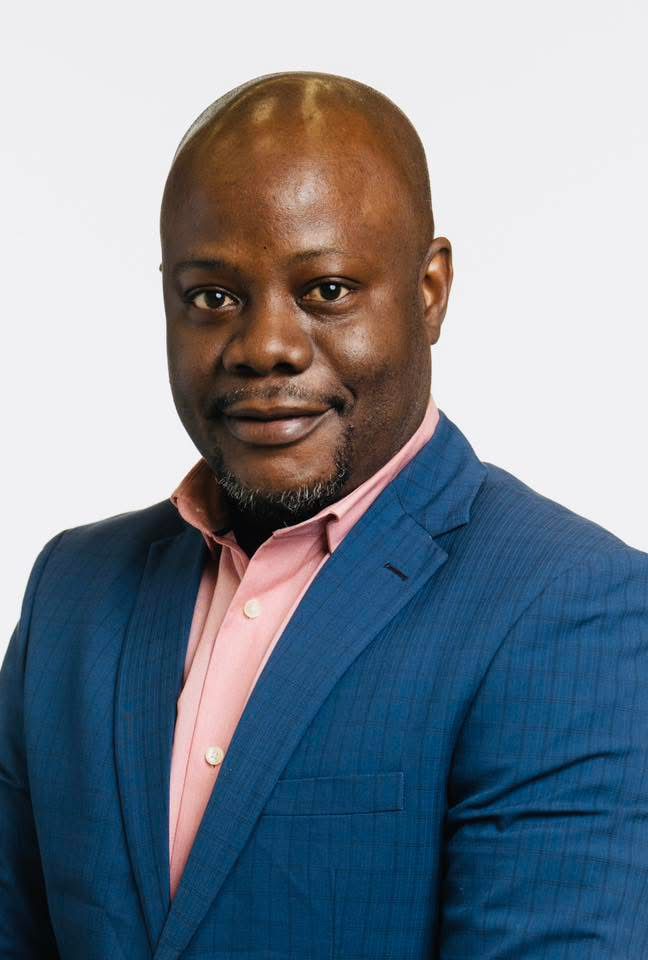
Op-Ed By Anderson Slober Chea
Deputy Secretary General for Press & Public Affairs, Congress for Democratic Change (CDC)
Sweden’s decision to shut down its Embassy in Liberia by 2026 is not routine diplomacy; it is a direct political condemnation of President Joseph Boakai’s failed leadership. After nearly twenty years as one of Liberia’s most principled and dependable development partners, Sweden is not departing voluntarily; it is fleeing a country where governance has collapsed into corruption, institutional decay, and a dangerous erosion of the rule of law. For two decades, Sweden invested more than 2.26 billion SEK (approximately $208 million USD) into Liberia’s democracy, justice sector, decentralization efforts, gender equality, human rights, rural infrastructure, forestry governance, energy access, and youth employment. Not many other development partners matched Sweden’s credibility or long-term commitment.
Today, that investment is being abandoned because the Liberian government has become unrecognizable from the reform-minded partner Sweden once supported during the tenures of former President Ellen Johnson-Sirleaf and President George M. Weah. Now under President Boakai, the rule of law has been shredded through politically engineered arrests of opposition leaders and unconstitutional removals of tenured officials. Corruption has metastasized, from illegal procurement scandals to the hijacking of state institutions for ethnic and partisan patronage. Meanwhile, ordinary Liberians face suffocating hardship as prices rise, unemployment grows, and the economy teeters under the weight of an exaggerated $2.1 billion “paper budget.”
Democracy is also under direct assault, with growing political intimidation and the dangerous centralization of state power.
Sweden’s exit is not administrative; it is a historic diplomatic indictment, a clear declaration that Liberia under President Boakai is untrustworthy, unaccountable, and unfit for credible partnership.
Why Sweden Is Leaving: Governance in Collapse
Sweden’s withdrawal is rooted in the complete breakdown of governance. Under the Boakai administration, the rule of law has collapsed into political warfare: opposition figures jailed on fabricated charges, a constitutionally elected Speaker removed through bribery, and the justice system transformed into a partisan weapon. Human rights have deteriorated as tenured officials were dismissed illegally and civil liberties have continued to shrink.
Transparency has been destroyed entirely. The infamous Yellow Machines scandal, executed outside procurement laws, stands as a symbol of the regime’s disdain for accountability. At the same time, public funds are diverted into massive discretionary budgets at the Executive Mansion and the offices of Regime Speaker Richard Nagbe Koon and Deputy Speaker Thomas P. Fallah and other high level Boakai’s officials, funds widely believed to be siphoned back to the President’s inner circle.
Over 85% of key national institutions, including the MFDP, CBL, LRA, Defense, and others, have been handed to ethnic and political loyalists, undermining competence and driving the economy toward paralysis.
Sweden’s judgment is clear: these failures are not accidental, but deliberate acts of state capture. No credible donor will finance a government that steals from its people and dismantles democratic norms.
Weak Governance and Entrenched Corruption
Sweden’s exit becomes even more understandable when one examines how thoroughly the Boakai administration has destroyed Liberia’s accountability ecosystem. Sweden funded the Carter Center’s justice programs, CENTAL’s anti-corruption operations, NAYMOTE’s governance initiatives, the Budget Strengthening Initiative, LRA reforms, and UNDP’s decentralization efforts, these very institutions are now severely weakened and unable to operate effectively under this lawless administration.
Hundreds of Liberians employed through these programs are now at risk, not because Sweden abandoned them, but because their government poisoned donor confidence. Corruption scandals go unresolved, contracting has returned to secret backroom deals, and political interference dominates every major agency including the once highly respected Supreme Court of Liberia. Sweden, globally respected for its strict governance standards, has simply lost faith.
Democratic Backsliding and Power Centralization
Despite heavy donor investment, the Boakai administration has halted decentralization and consolidated power within the Executive Mansion. Justice is fragile and increasingly politicized. Activists, journalists, and civil society leaders operate under growing fear as threats, harassment, and intimidation become routine.
Sweden recognizes this pattern; it is the early stage of authoritarian rule, and refuses to fund Liberia’s drift toward democratic suffocation.
Deteriorating Human Rights and Civic Space
Sweden is one of the world’s strongest champions of gender equality, SRHR, press freedom, and civic liberties. Yet Liberia under Boakai contradicts all of these values. SGBV cases rise, SRHR access remains weak, and the justice system fails vulnerable populations. Journalists are beaten and censored, while civic space shrinks rapidly.
Sweden has withdrawn its bilateral funding from Liberia, delivering a significant financial shock of $208 million, a direct consequence of the Liberian government’s actions that endanger women, silence the press, and crush democratic freedoms—behaviors Sweden does not reward. This exit erases one of Liberia’s largest bilateral portfolios, impacting critical sectors across the nation. The funding losses include $43.0 million for infrastructure and roads, $34.3 million for elections and peacebuilding, and $33.6 million for governance and the rule of law. Additional major cuts affect economic growth and the private sector ($24.7 million), energy access ($24.6 million), and multisector programs ($19.3 million). Further reductions hit agriculture and climate resilience ($18.0 million), national institutions ($17.7 million), youth employment and technical training ($11.3 million), and gender and women’s rights ($9.2 million), collectively placing Liberia in a category of nations facing severe repercussions for undermining democratic principles.
This is one of Liberia’s largest bilateral portfolios, now gone and these investments will not be replaced easily.
Who Loses the Most? Ordinary Liberians
The political elite will survive; the Liberian people will not.
- Rural communities lose feeder roads, mini-grids, climate programs, and agricultural modernization, pushing them deeper into isolation and poverty.
- Women and girls lose SGBV prevention, SRHR services, and community justice programs, at a time when violence is escalating.
- Youth lose TVET programs, PROSPECTS IV, and job opportunities, worsening an already explosive unemployment crisis.
- Civil society loses its strongest defender as Sweden’s departure leaves journalists, integrity institutions, and community networks vulnerable to political retaliation.
- State institutions such as the LRA, MFDP, Judiciary, and NEC will weaken further, undermining revenue collection, fiscal stability, justice, and election integrity.
- The economy will buckle as renewable energy, agriculture value chains, and private-sector growth stall, and the regime’s $2.1 billion budget collapses under global scrutiny.
Political Interpretation: A Vote of No Confidence
Sweden’s departure is the clearest diplomatic signal possible:
“We no longer trust Liberia’s leadership.”
This is donor fatigue at its most devastating level; the worst Liberia has ever faced in its modern donor history. Sweden has watched a government that refuses reforms, protects corruption, politicizes institutions, restricts freedoms, and abandons its own people. The international community now views Liberia under Boakai as unreliable, unstable, and unworthy of sustained partnership. In diplomatic terms, Sweden has issued a global vote of no confidence.
Conclusion
Sweden’s withdrawal is a national alarm bell. Liberia has lost more than $208 million, weakened vital institutions, and undermined programs supporting women, youth, rural citizens, and democracy itself, all because of one administration’s corruption, incompetence, and contempt for good governance. If Liberia fails to act, Sweden will be the first of many partners to walk away. This is a wake-up call, a rallying cry for Liberians to reject a failing president and the network of thieves surrounding him before they bankrupt the nation’s future. Liberia stands at a crossroads. Sweden has chosen its path. Now the Liberian people must choose theirs.
Liberia can no longer afford this leadership; the time for change is now.

