
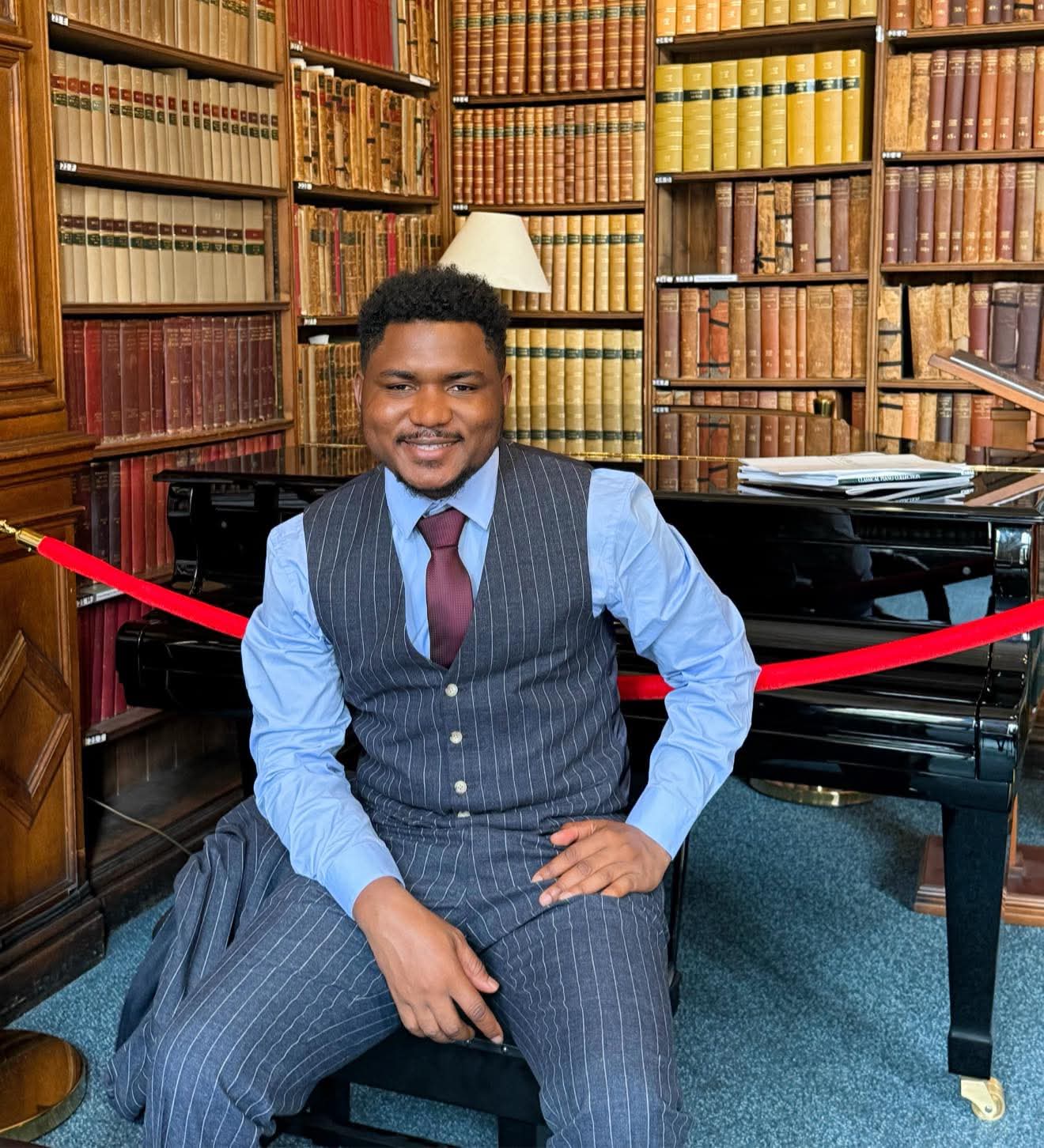
An Oxford University scholar, Wantoe Teah Wantoe, has penned an open letter to Cllr Kanio Bai Gbala, a controversial legal scholar and former Vice Chair of Liberia’s Anti-Corruption Commission (LACC). The letter discusses the implications of recent events on Liberia’s journey toward reconciliation and transitional justice, specifically the state reburial of Former President Samuel Kanyon Doe. Wantoe argues that Doe’s legacy is complex and multifaceted, with both positive and negative aspects. While Doe is hailed as a son of the soil in Grand Gedeh, his administration was marked by serious human rights issues and policies that contributed to Liberia’s descent into civil war.
The state reburial of Former President Samuel Kanyon Doe has fueled controversy, with some viewing it as a reconciliatory gesture and others seeing it as a symbol of unresolved trauma. Wantoe told Cllr. Gbala that Doe’s legacy demands reflection, not celebration or rivalry, and emphasizes the need for accountability, memorialization, and non-repetition.
Wantoe wrote: Let us be clear. President Doe’s legacy, like that of Senator Prince Yormie Johnson, is not without moral complexity. In Grand Gedeh, he is hailed as a son of the soil who broke tribal barriers to rise to the presidency. But this must not obscure the fact that his administration was marked by serious human rights violations, suppression of political dissent, and policies that contributed to Liberia’s descent into civil war. If this state reburial was indeed about reconciliation, then where was the national conversation with the victims? Where was the acknowledgment of the 250,000 lives lost in a senseless war that Doe’s governance helped ignite?
Liberia has obligations under international law, including the Geneva Conventions, the Rome Statute, and the UN Basic Principles on the Right to a Remedy and Reparation for Victims of Gross Violations of International Human Rights Law. These instruments emphasize the importance of accountability and justice in post-conflict societies. Wantoe questions whether Liberia can genuinely claim to be committed to transitional justice while honoring figures whose actions remain deeply contested.
“You are no stranger to the law’s weight in post conflict societies. You teach Public International Law and Contracts, and you once served as the Vice Chair of the Liberia Anti Corruption Commission. Surely, you understand the obligations Liberia holds under the Geneva Conventions, the Rome Statute, and the UN Basic Principles on the Right to a Remedy and Reparation for Victims of Gross Violations of International Human Rights Law. These instruments are not only legal frameworks but also moral compasses, emphasizing the need for accountability, memorialization, and non repetition. Can we genuinely claim to be committed to transitional justice if state instruments are simultaneously erecting honorific tributes to figures whose actions remain deeply contested?” The young scholar questioned Cllr. Gbala.
The establishment of a War and Economic Crimes Court by President Boakai’s administration is seen as a step toward accountability. However, Wantoe highlights the inconsistency in elevating figures like Doe, who have been linked to human rights violations and are recommended for further investigation or lustration by the Truth and Reconciliation Commission (TRC). This inconsistency undermines the legitimacy of the court and public confidence in the national healing agenda.
Wantoe urges Liberians, including public intellectuals like Gbala, to engage in hard, necessary conversations about the country’s past and its path forward. The goal is to guide society toward confronting uncomfortable truths rather than skirting around them with political theater. The question remains: what kind of Liberia do we want to leave behind? One where warlords and presidents turned strongmen are buried with national honors, or one where truth and justice are non-negotiable?
The path to reconciliation requires consistency, accountability, and a commitment to justice. Liberians must align national rituals with the imperative of justice, ensuring that the past is not used for political points but rather as a means to reconcile fully and honestly. By doing so, the country can move toward a future where truth and justice are paramount, and the sacrifices of victims are honored and remembered.

