
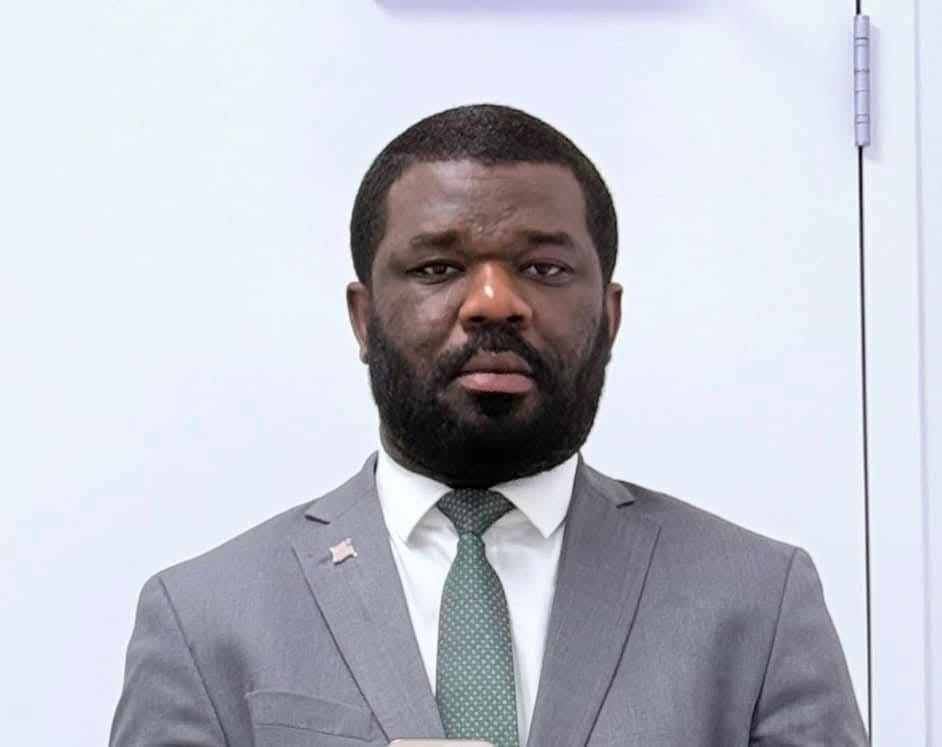
A widely publicized debate between Martin K.N. Kollie, a self-imposed exile activist and surrogate of the ruling Unity Party (UP), and Isaac Doe, an accomplished financial expert and well respected banker in the Americas, and former Deputy Minister for Youth Development, took place on the Spoon Media Network. The debate got started on how Liberia reached its current declining state. Martin attributed the country’s problems to corruption, stating that Liberia’s history is replete with good and bad dating back to 1822. According to Martin, the Unity Party of President Joseph Boakai came to power due to five excesses of former President George Weah, but was only able to list three: corruption, poverty, and militarization of youth.
However, Isaac Doe rebutted Martin’s claims, arguing that former President Weah lost the election due to propaganda, lies, and unfounded accusations spread by Martin and others for their own selfish agenda. Isaac also pointed out that Martin and others falsely accused the CDC government of stealing US$16 billion from the country’s central bank, including US$25 million meant for a liquidity mop-up exercise. Furthermore, Isaac noted that despite the Unity Party’s accusations of the CDC government killing auditors and vowing to prosecute former officials, not a single former CDC officer has been prosecuted for allegedly stealing US$16 billion, US$25 million and killing auditors after 18 months in power.
The debate focused on key issues, including the economy, education, and corruption. Regarding the economy, Martin K.N. Kollie argued that former President George Weah’s failure to fulfill his social contract to reduce poverty led to his defeat, and therefore President Boakai’s economy is performing better. However, Isaac presented empirical evidence refuting this claim. According to recent World Bank statistics, Liberia is currently the 7th poorest country, compared to 8th under Weah’s leadership.
Isaac presented empirical evidence refuting this claim. According to recent World Bank statistics, Liberia is currently the 7th poorest country, having slipped from 8th position under Weah’s leadership. This suggests more Liberians have fallen into poverty under Boakai’s leadership compared to Weah’s. On education, Martin was unable to provide data showing that Boakai has spent more on education than Weah. Isaac presented verified data showing that the Weah government spent $98 million on education in 2023, while the Unity Party spent $86 million in 2024. Additionally, Isaac highlighted that President Weah provided free tertiary education in government-run higher institutions of learning, unlike the Boakai regime that is frantically trying to revert this gain.
Regarding corruption, Martin Kollie argued that the Boakai regime’s suspension of alleged corrupt officials demonstrates its commitment to fighting corruption. However, Isaac countered with evidence that Weah’s administration not only suspended but also prosecuted alleged corrupt officials, with many facing jail time. He listed several examples, including Duannah Siryon, Tugbeh C. Tugbeh, and others from the National Housing Authority.
Others mentioned include Makenneh Keita, who was accused of soliciting a $5 million bribe while serving as Presidential Special Projects Coordinator. Additionally, Nathaniel F. McGill, Bill Twehway, and Sayma Syrenius Cephus faced consequences, including suspension, after being sanctioned by the US Treasury in August 2022. The former Deputy Minister noted that President Weah’s administration granted prosecutorial power to the Liberia Anti-Corruption Commission, a move not taken during Ellen Johnson Sirleaf’s presidency, and also strengthened the Internal Audit Agency’s capacity.
The debate surrounding President Boakai’s US trip highlights differing perspectives on Liberia’s priorities. Activist Martin K.N. Kollie praised Boakai’s English skills, which earned recognition from former President Donald Trump, as a positive reflection on Liberia. Conversely, Isaac Doe questioned the substance of the visit, highlighting Trump’s focus on Boakai’s English fluency over pressing Liberian issues. Doe emphasized that Liberians elected Boakai based on his perceived governance competence, not his language skills. Former Minister Doe argued that if English proficiency drove development, Liberia would have progressed significantly since its founding by American-born settlers in 1847. Marketers in areas like Redlight, Waterside and all parts of Liberia prioritize poverty alleviation and job creation for the children over presidential language abilities. The focus, Doe suggested, should shift to addressing fundamental issues impacting ordinary Liberians’ lives.

